Plus, the Trump administration and the GOP—the same group Musk spent millions to get into the White House—cut billions in federal support for electric vehicles last year. The administration is also working to lower fuel economy standards for truck engines, which would have required manufacturers to hit aggressive climate goals. Heavy trucks alone account for some 7 percent of US greenhouse gas emissions.
And yet, it’s not a bad time to be an EV-maker. US diesel prices hit record highs this month as the Iran War continues to disrupt oil production and shipping in the Middle East; prices are up nearly double from this time last year. The truck “is going to make a ton of sense economically because the cost of electricity is much less than the cost of diesel, especially in these crazy times,” Musk said in his pre-taped address, nodding to the conflict launched by the administration he once worked for.
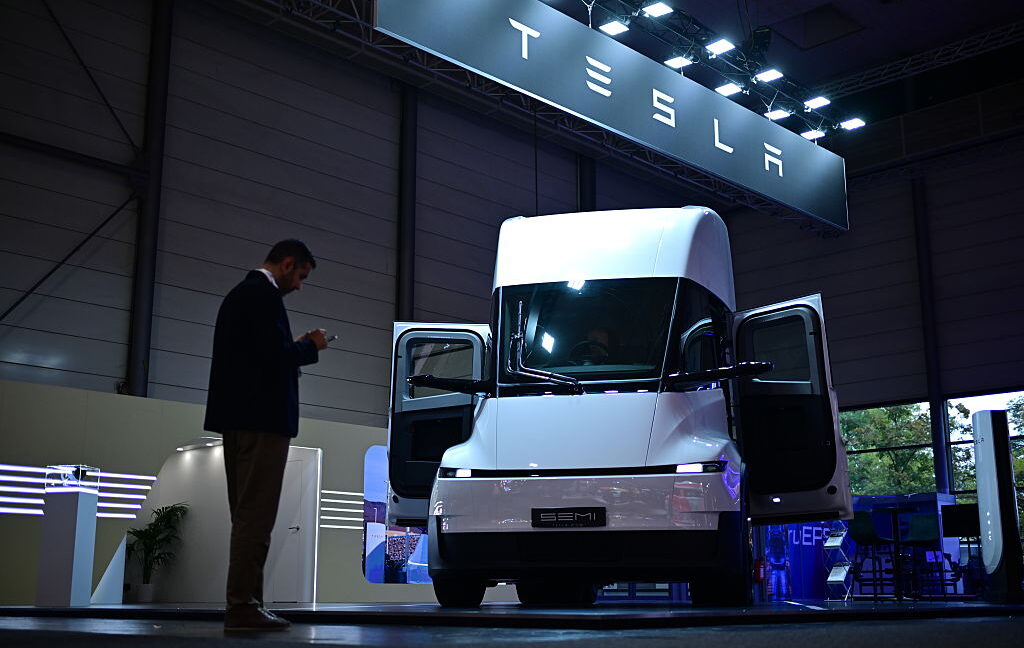
This week, an alliance of shippers including Microsoft and PepsiCo placed a record-setting order for 2,500 Tesla Semis, to be delivered starting this year and through the next 18 months. If those trucks reach customers, they would nearly double the number of heavy-duty electric trucks on US roads today.
The group selected Tesla trucks over competitors’ after “assessing price, performance, production capability, and service support,” Meena Bibra, a spokesperson for the nonprofit Smart Freight Centre, which was involved in the deal, told WIRED. If the carriers are accustomed to another truckmaker’s vehicles, or if other electric trucks better meet their needs, they may also choose to purchase electric trucks from Kenworth, Ride, and Volvo.
Pooling demand among many carriers allowed the electric automakers to bring down the prices of the new trucks, the group said.
Full Self-Driving (Supervised), Tesla’s driver assistance feature, will not yet be available on the Semi, though Musk said in his address that it would debut in “the very near future.” The feature’s predecessor technology, Enhanced Autopilot, was promised during the initial 2017 rollout.
This story originally appeared on wired.com.